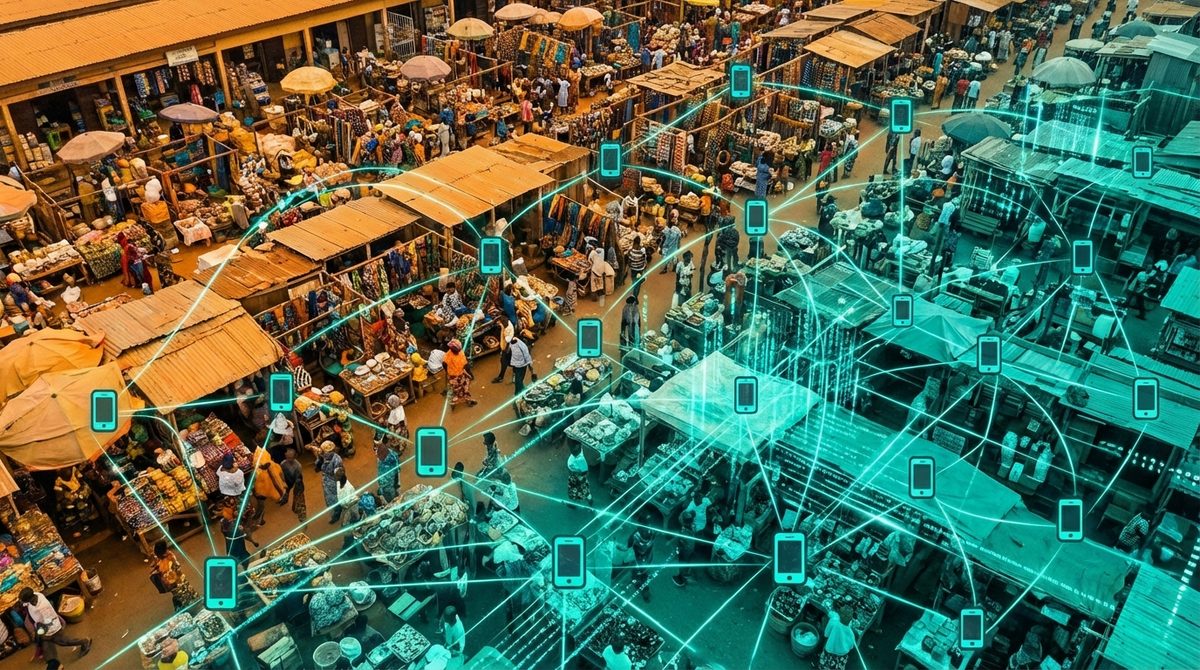
In 2024, Africa moved $1.105 trillion through mobile money (GSMA 2025). That is more than the GDP of most African countries combined. It is more money than flows through the formal banking systems of many nations on the continent. Mobile money is not a fintech experiment — it is the financial infrastructure of Africa.
In Rwanda alone, MTN MoMo processes 246 million transactions per quarter (MTN Q3 2025). The country's digital payments now exceed 300% of GDP (BNR 2025). When you buy groceries, pay school fees, split a restaurant bill, or send money to family — it happens on MoMo. Mobile money is as essential as electricity.
But here is the question nobody is asking loudly enough: who protects the buyer when mobile money is used for commerce?
The answer, right now, is nobody. And that is exactly why TandPay exists.
The Trillion-Dollar System With Zero Buyer Protection
Mobile money was built for one thing: transferring money between people. Send 5,000 RWF to your mother. Pay the electricity bill. Cash out at the agent. These are the use cases that MTN MoMo, M-Pesa, and other mobile money systems were designed for — and they work brilliantly.
But commerce is different. When you send money to buy a product, you are not just transferring money — you are entering into a transaction with expectations on both sides. The buyer expects to receive a specific product. The seller expects to keep the payment after delivering. And when either side breaks that expectation, mobile money has no mechanism to help.
Think about what happens when you buy a pair of shoes from someone on WhatsApp and pay via MoMo. You send the money. The seller receives it instantly. If the seller never delivers — or delivers the wrong item, or delivers a damaged item — what can you do?
- Call MTN? They will tell you the transaction was completed successfully. From their perspective, it was — money moved from your account to the seller's account. The transfer worked perfectly.
- Go to the police? For a 15,000 RWF transaction? The time and effort required makes it impractical for most everyday purchases.
- Confront the seller? If you only know them through Instagram DMs, you may not even know their real name or location.
The result: you absorb the loss. And next time, you think twice before buying anything online. This is not a rare occurrence — it is happening every day, and it is holding back the entire e-commerce ecosystem in Africa.
Rwanda's Mobile Money Success — And Its Blind Spot
Rwanda is one of the great mobile money success stories. Consider these numbers:
- 86% mobile money adoption (FinScope 2024) — one of the highest rates in the world
- 246 million transactions per quarter on MTN MoMo alone (MTN Q3 2025)
- Digital payments exceeding 300% of GDP (BNR 2025)
- 96% financial inclusion rate (FinScope 2024) — up from 48% in 2008
This is an extraordinary achievement. Rwanda leapfrogged traditional banking entirely, going from a largely cash economy to a digitally connected financial ecosystem in less than two decades. The government's push for a cashless economy, combined with MTN's infrastructure investment and BNR's progressive regulation, created a system that works.
But the system was built for transfers, not transactions. And as Rwandans increasingly use mobile money to buy and sell goods through social media, that distinction matters enormously.
Transfer vs. Transaction: Why the difference matters
A transfer is one-directional: money moves from A to B. A transaction is bidirectional: money moves from A to B, and goods move from B to A. Mobile money handles transfers perfectly. But for transactions, you need a mechanism that connects the money flow to the goods flow — that is what escrow does.
The Trust Deficit in Numbers
The lack of buyer protection is not just an inconvenience — it is a measurable economic problem that is suppressing the growth of digital commerce across Africa.
These numbers from PYMNTS, UNCTAD, and BNR/CGAP research tell a clear story: trust is the biggest barrier to e-commerce growth in Africa. Not internet access, not smartphone penetration, not mobile money availability — trust. Half of all potential e-commerce customers are sitting on the sidelines because they do not trust the process.
And the cost is staggering. $5 billion per year in lost transactions, abandoned carts, and deals that never happen because one side does not trust the other. That is not fraud losses — that is the economic activity that would have happened if trust existed.
TandPay: The Missing Layer
TandPay is not trying to replace mobile money. MTN MoMo is excellent at what it does. TandPay is the trust layer that sits on top of mobile money — the piece that makes mobile money safe for commerce, not just transfers.
Think of it like this: mobile money is the highway. TandPay is the seatbelt. The highway works perfectly for getting from A to B. But when you are carrying valuable cargo (your money or your product), you need protection in case something goes wrong.
Here is how TandPay transforms a risky WhatsApp transaction into a protected one:
- Seller creates an order on TandPay with product details, photos, and price
- Seller shares the payment link on WhatsApp, Instagram, or anywhere
- Buyer pays via MTN MoMo or Airtel Money — the money goes into TandPay's escrow, not to the seller
- Seller delivers the product with a unique 4-digit delivery code
- Buyer confirms delivery by entering the code — seller gets paid after the 1-hour inspection window if no issue is reported
If the seller never delivers, the buyer can open a dispute and get their money back. If the buyer claims non-delivery after entering the code, there is digital proof they received the goods. Both sides are protected.
TandPay does not compete with MoMo — it completes it
TandPay uses MTN MoMo and Airtel Money as its payment rails. When a buyer pays, the money comes from their mobile money account. When a seller gets paid, the money goes to their mobile money account. TandPay adds the escrow layer in between — the part that holds the money safely until delivery is confirmed. Mobile money moves the money. TandPay protects it.
Why No One Built This Before
If the need is so obvious, why has no one built an escrow layer for mobile money commerce before? The answer is a combination of factors:
- Mobile money APIs were not accessible. Until recently, building on top of mobile money required expensive partnerships and complex integrations. MTN's MoMo Open API changed that.
- Social commerce was not big enough. Five years ago, most commerce still happened in physical markets. The explosion of WhatsApp and Instagram commerce — accelerated by COVID-19 — created the volume that makes an escrow solution viable.
- The problem was seen as "normal." Losing money to scams was considered a cost of doing business online. People accepted it. But as commerce volumes grow, the cost of distrust becomes impossible to ignore.
- Formal escrow is too expensive. Traditional escrow services charge 3-5% or more, require legal frameworks, and are designed for large transactions (real estate, acquisitions). TandPay's 2.5% fee makes escrow accessible for everyday commerce.
The Infrastructure Opportunity
Here is the bigger picture: the global escrow market is projected to grow from $3.46 billion to $21.49 billion by 2032 (Fortune Business Insights 2024). Most of that growth will come from digital commerce in emerging markets — exactly where mobile money dominates.
Africa's $1.1 trillion mobile money ecosystem is the largest mobile money market in the world. And right now, it has zero escrow infrastructure for commerce. That is not a gap — it is an open field.
TandPay is building that infrastructure in Rwanda first. But the model — escrow on top of mobile money, designed for social commerce — works everywhere mobile money exists. Kenya, Ghana, Tanzania, Uganda, Senegal — every country where MoMo or M-Pesa or Orange Money moves billions has the same trust gap.
Rwanda is the ideal starting point. With 86% mobile money adoption, a progressive regulatory environment, and a government that actively supports fintech innovation, Rwanda has all the ingredients for a successful launch. Once proven here, the model can expand across the continent.
What Needs to Change
The path forward is clear. Mobile money operators built the rails. Social media platforms built the marketplaces. What is missing is the trust layer that connects them safely. Three things need to happen:
- Buyers need to demand protection. Stop accepting "send money to my MoMo" as the only payment option. Ask sellers: "Do you accept escrow payment?" If they do, you know your money is safe. If they do not, that tells you something too.
- Sellers need to offer protection. Offering escrow payment is a competitive advantage. It signals that you are confident in your product, that you have nothing to hide, and that you care about your customer's safety. Sellers who offer TandPay will win more business.
- The ecosystem needs infrastructure. Not more apps, not more marketplaces, not more social media features — infrastructure. Escrow is infrastructure. It is the plumbing that makes safe commerce possible. And until it exists at scale, Africa's e-commerce potential will remain unrealized.
Your Mobile Money Deserves Better
You have already made the leap from cash to mobile money. You already trust your phone with your finances. You already buy and sell through WhatsApp and Instagram. The only thing missing is protection for those transactions.
TandPay does not ask you to change how you shop or sell. It does not require a new app, a new payment method, or a new platform. It simply adds the one thing that mobile money lacks: the guarantee that your money is safe until you get what you paid for.
$1.1 trillion flows through mobile money in Africa every year. It is time that money had protection. Learn how TandPay's escrow works step by step in our guide: Mobile Money Escrow: How TandPay Protects Buyers and Sellers.
Your Mobile Money Deserves Protection
Stop risking your MoMo on unprotected transactions. Start a safe deal on TandPay — escrow protection for every purchase.
Start a Safe Deal on TandPay